
*Discovering the history, mysteries, legends, and timeless beauty of one of Andalusia’s most fascinating villages.*
There are places in the world that capture your imagination before you even set foot in them. Mojácar, a beautiful whitewashed village overlooking the Mediterranean Sea in southern Spain, is certainly one of those places.
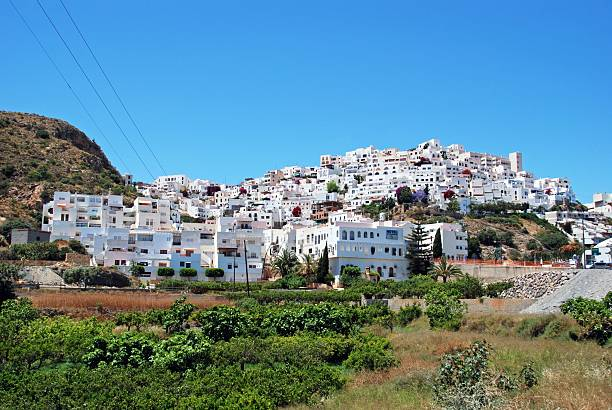
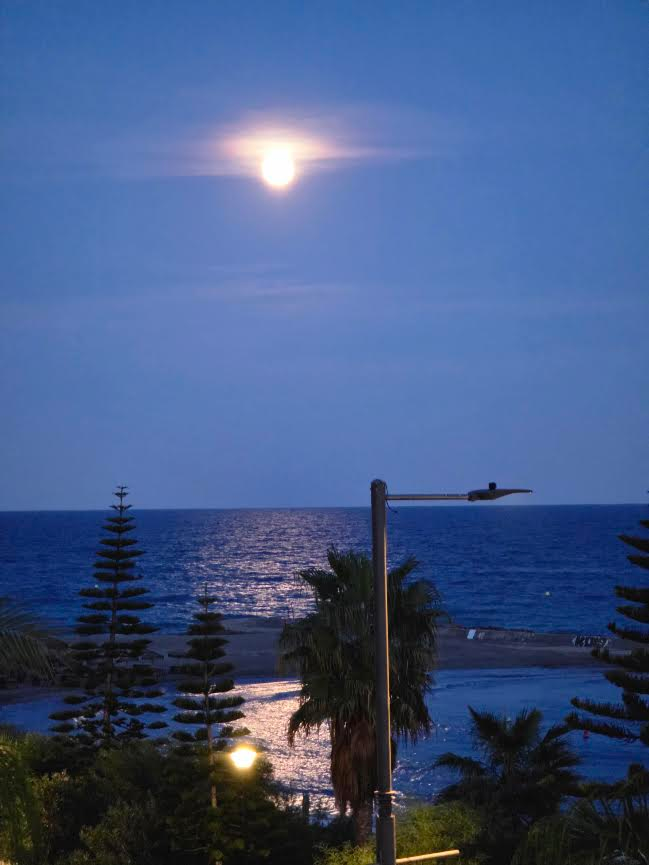
Imagine approaching a hillside covered with hundreds of brilliant white houses, seemingly stacked one upon another, their walls glowing in the Spanish sunshine. Above them stretches an endless blue sky, while far below, the Mediterranean sparkles in the distance.
At first, Mojácar looks like a picture postcard.
But as we wander through its narrow, winding streets, we begin to discover something far more interesting.
Behind those white walls lies a history stretching back thousands of years, filled with ancient civilizations, Moorish rulers, religious conflicts, remarkable legends and traditions that have survived into the present day.
Come along and discover the stories that make Mojácar so special ,a Village Between the Mountains and the Sea
Mojácar is situated in the province of Almería, in Andalusia, on the southeastern coast of Spain.
The historic village, known as Mojácar Pueblo, sits high in the foothills of the Sierra Cabrera. Below it lies Mojácar Playa, with approximately 17 kilometers of Mediterranean coastline.
The region is famous for its sunshine, mild winters and warm summers.
But what makes Mojácar truly unforgettable is its setting.
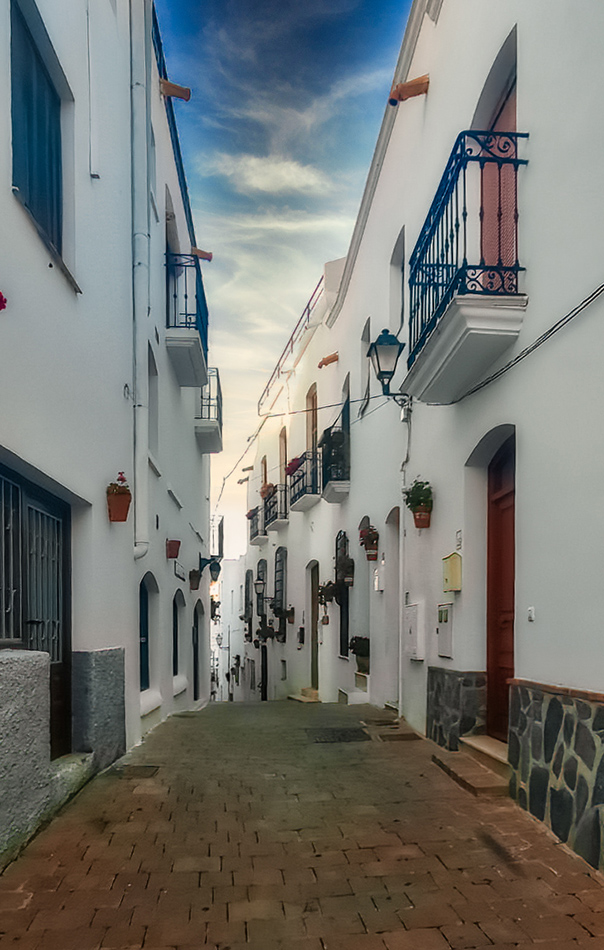
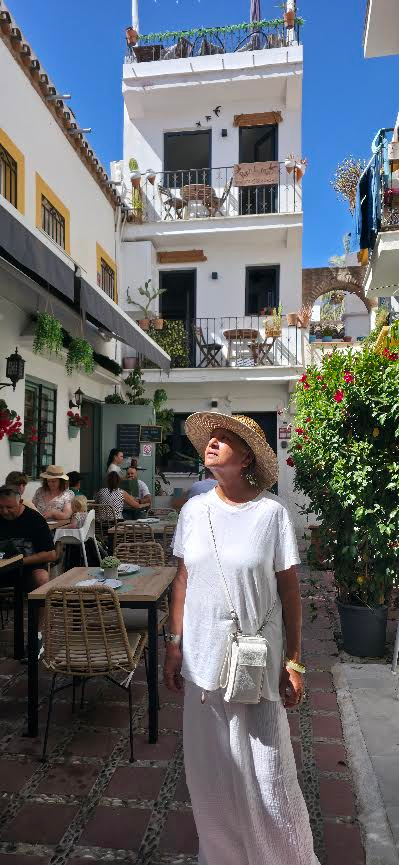
Walking through the old village feels almost like stepping into another century. Its narrow streets twist unexpectedly between whitewashed buildings. Small staircases lead to hidden corners, colorful flowers spill over balconies, and around almost every bend there is another breathtaking view.
It is the kind of place where getting lost might be the best way to discover it.
Walking in the Footsteps of Ancient Civilizations
As we explore Mojácar, it is fascinating to imagine how many different peoples have walked these same hills.
Long before the Romans arrived, southeastern Spain was home to ancient civilizations, including the Bronze Age Argaric culture.
The Phoenicians later established trading connections along the Mediterranean coast, followed by the Romans, whose influence spread throughout the region.
After the decline of Roman authority, the Visigoths ruled much of the Iberian Peninsula.
Then, during the eighth century, Muslim forces arrived, beginning a period that would profoundly shape Mojácar’s character.
The Moorish influence remains unmistakable.
Look closely at the village’s winding streets, tightly clustered houses and defensive position high above the valley. These are reminders of a time when protection, water supplies and the ability to observe approaching visitors were essential to everyday life.
During the centuries of Muslim rule, Mojácar became associated with the Kingdom of Granada, the last major Muslim kingdom in medieval Spain.
And this brings us to one of Mojácar’s most remarkable stories.
The Day Mojácar Chose Peace — The Legend of 1488
Imagine the year 1488.
Across southern Spain, the Catholic Monarchs Ferdinand and Isabella were extending their control over territories that had been ruled by Muslims for centuries.
Mojácar, too, faced an uncertain future.
According to local tradition, Captain Garcilaso de la Vega arrived to negotiate the village’s surrender.
The meeting is said to have taken place at the Moorish Fountain, today known as the Fuente de los Doce Caños — the Fountain of the Twelve Spouts.
The local leader, remembered as Alavez, reportedly delivered an extraordinary message.
He argued that the land belonged not only to Christians, but also to the Muslims and Jews who had lived there for generations.
All, he believed, had the right to call it home.
The story tells of a negotiated, peaceful transfer of the village.
Whether the conversation happened exactly as described is difficult to establish, and the subsequent history of the region was not free from religious persecution or displacement.
Nevertheless, the legend remains a powerful part of Mojácar’s identity.
Standing at the fountain today, it is moving to think that a place once used for something as ordinary as collecting water is also associated with such an extraordinary message of coexistence.
The Fountain That Remembers
The Fountain of the Twelve Spouts deserves a little more attention.
For centuries, this was one of the most important gathering places in the village.
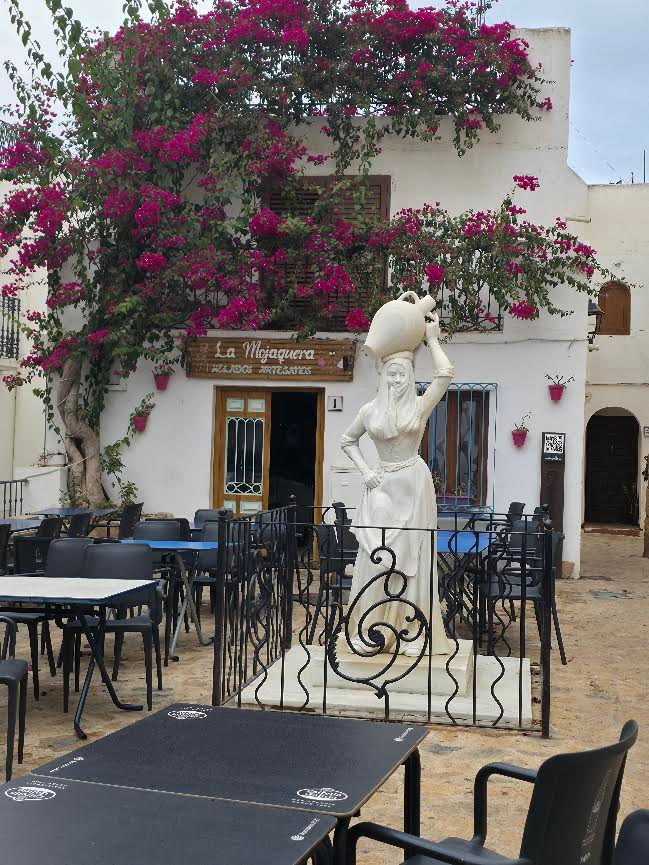
Women came to collect water, wash clothes and exchange news. Children played nearby, and generations of villagers depended on its flowing water.
The fountain was, in many ways, the social heart of the community.
An inscription recalls the historic events associated with the village’s surrender in 1488.
It is easy to imagine the fountain surrounded by villagers discussing the events of the day, completely unaware that their conversations would become part of a story remembered centuries later.
Sometimes the simplest places carry the greatest history.
Exploring the Old Village
One of the most enjoyable ways to experience Mojácar is to explore it on foot.
The Plaza Nueva is a wonderful place to begin. From its viewpoint, the landscape opens across the surrounding valley, with mountains stretching into the distance.
Nearby stands the eighteenth-century Ermita de los Dolores.
Continue through the narrow streets and you eventually reach the Church of Santa María, a remarkable sixteenth-century building with the solid appearance of a fortress.
Its thick stone walls remind us that churches were not always merely places of worship. In uncertain times, they could also provide protection.
Another wonderful viewpoint is the Mirador del Castillo, near the highest part of the village.
From here, the panorama of the surrounding countryside and Mediterranean coastline is magnificent.
Along the way, we encounter old gateways, including the Puerta de la Ciudad and the Puerta de la Almedina, and historic buildings such as the Casa del Torreón.
Each seems to have its own story.
And then, tucked away among the white houses, we find a mysterious little symbol.
The Indalo — A Guardian Above the Door
Look carefully at the houses in Mojácar and you may notice a curious figure painted on the walls.
It resembles a person with raised arms, holding an arch over the head.
This is the Indalo, one of the most recognizable symbols of Almería.
Its origins are connected with prehistoric rock paintings discovered in the Cueva de los Letreros, near Vélez-Blanco.
For generations, local people have believed that the Indalo offers protection against evil, bad luck and storms.
Traditionally, the figure was painted on the outside of houses as a protective charm.
During the twentieth century, artists helped popularize the symbol, and it gradually became an emblem of the entire province.
Today, the Indalo appears on ceramics, jewellery, signs and souvenirs.
But I find its older meaning much more interesting.
Imagine a family centuries ago, painting this simple figure beside the entrance to their home, believing that it would protect everyone living inside.
It is a wonderful reminder of how ancient beliefs can survive in modern life.
The Strange Tale of Walt Disney and Mojácar
Now we come to a story that sounds almost too extraordinary to believe.
What if Walt Disney, the creator of Mickey Mouse, had actually been born in Mojácar?
According to a local legend, three mysterious men arrived in the village in 1940.
They were dressed in grey suits and claimed to represent Walt Disney Studios.
Apparently, they were searching for the birth certificate of a man named José Guirao Zamora, said to have been born in Mojácar in 1901.
The visitors supposedly claimed that José Guirao Zamora and Walt Disney were the same person.
The legend suggests that the child had somehow been taken to America, where he grew up to become one of the world’s most famous filmmakers.
What a story!
Unfortunately for lovers of mysteries, the historical evidence tells us that Walt Disney was born in Chicago on December 5, 1901.
There is no reliable evidence that he was born in Mojácar or that the two men were the same person.
Still, I rather like the fact that this small Andalusian village has managed to weave itself into the legend of one of the world’s most famous entertainers.
It adds another touch of magic to a place already overflowing with stories.
The Difficult Years and a New Beginning
Mojácar’s history was not always peaceful or prosperous.
Following the end of Moorish rule, new families arrived from the Kingdom of Murcia, changing the village’s population and traditions.
The nineteenth century brought further hardship.
The Peninsular War, epidemics and economic difficulties affected the community, and 1812 is remembered in local accounts as an especially difficult year.
The discovery of silver deposits in the nearby Sierra Almagrera during the nineteenth century brought renewed economic activity to the region.
But like many rural Spanish villages, Mojácar later struggled with poverty and emigration.
Then something remarkable happened.
During the twentieth century, particularly in the 1960s, artists, writers and travellers began discovering Mojácar.
They were attracted by its beautiful light, unusual architecture, peaceful atmosphere and spectacular surroundings.
Old houses were restored, and the village gradually developed a reputation as a haven for creative people.
Tourism helped bring new life to the community.
It is rather fitting that a village with such a rich cultural past should become a place where artists found inspiration.
A Taste of Traditional Mojácar
After wandering through the steep streets of Mojácar, it is time to think about something equally important: food!
The cuisine of this region reflects the relationship between the mountains and the sea.
Fresh Mediterranean fish, prawns, grouper and red mullet are important local ingredients.
But some of the most interesting traditional dishes come from the kitchens of ordinary village families.
One speciality is called gurullos.
These are tiny pieces of handmade pasta, traditionally prepared with flour, water and salt.
They are often cooked in a hearty stew with rabbit, game birds, vegetables, peppers, beans or potatoes.
It is the sort of comforting, rustic cooking that has been passed down through generations.
There is something particularly appealing about these old recipes.
They remind us of a time when families made the most of whatever ingredients were available, creating nourishing meals from simple produce.
And of course, no visit to this part of Spain would be complete without enjoying the wonderful Mediterranean atmosphere around the table.
When Mojácar Comes Alive — Moors and Christians
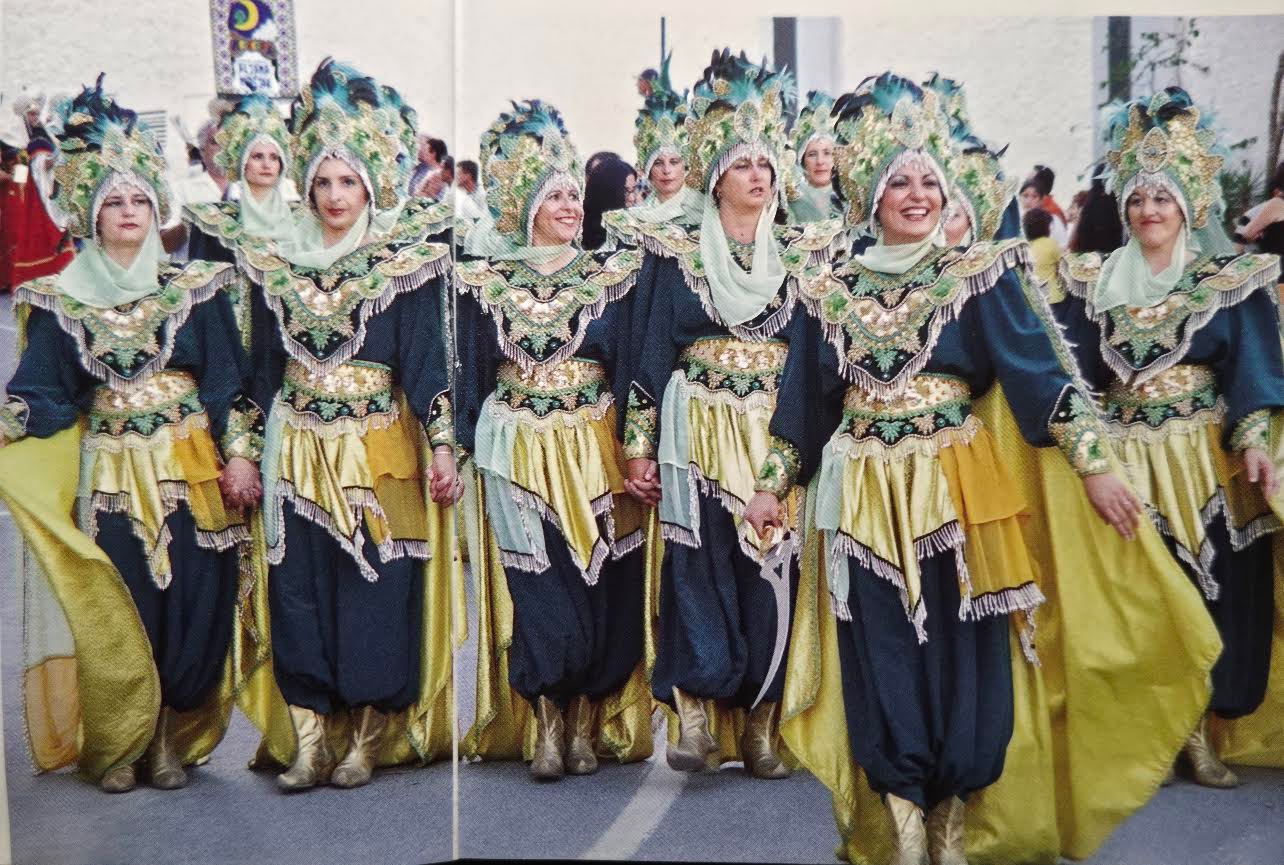
Imagine the quiet streets suddenly filled with music, magnificent costumes, colorful banners and elaborate processions.
This is Mojácar during its famous Moros y Cristianos festival.
The celebration commemorates the historical encounter between Moorish and Christian cultures.
Participants dress in richly embroidered costumes, with spectacular headdresses, flowing robes and vibrant colours.
The atmosphere is festive, theatrical and full of energy.
For a few days, the village becomes a living stage on which episodes from its past are remembered through music and pageantry.
Other celebrations include festivities honouring Santa Águeda, the patron saint, as well as Carnival and traditional community events.
These festivals are more than entertainment.
They help preserve the customs, memories and identity of the village.
The Magic of Mojácar
As our journey through Mojácar comes to an end, I find myself thinking about what makes this village so fascinating.
Certainly, its beauty is undeniable.
The whitewashed houses, the Mediterranean sunshine, the narrow streets and the spectacular views would be enough to make it a memorable destination.
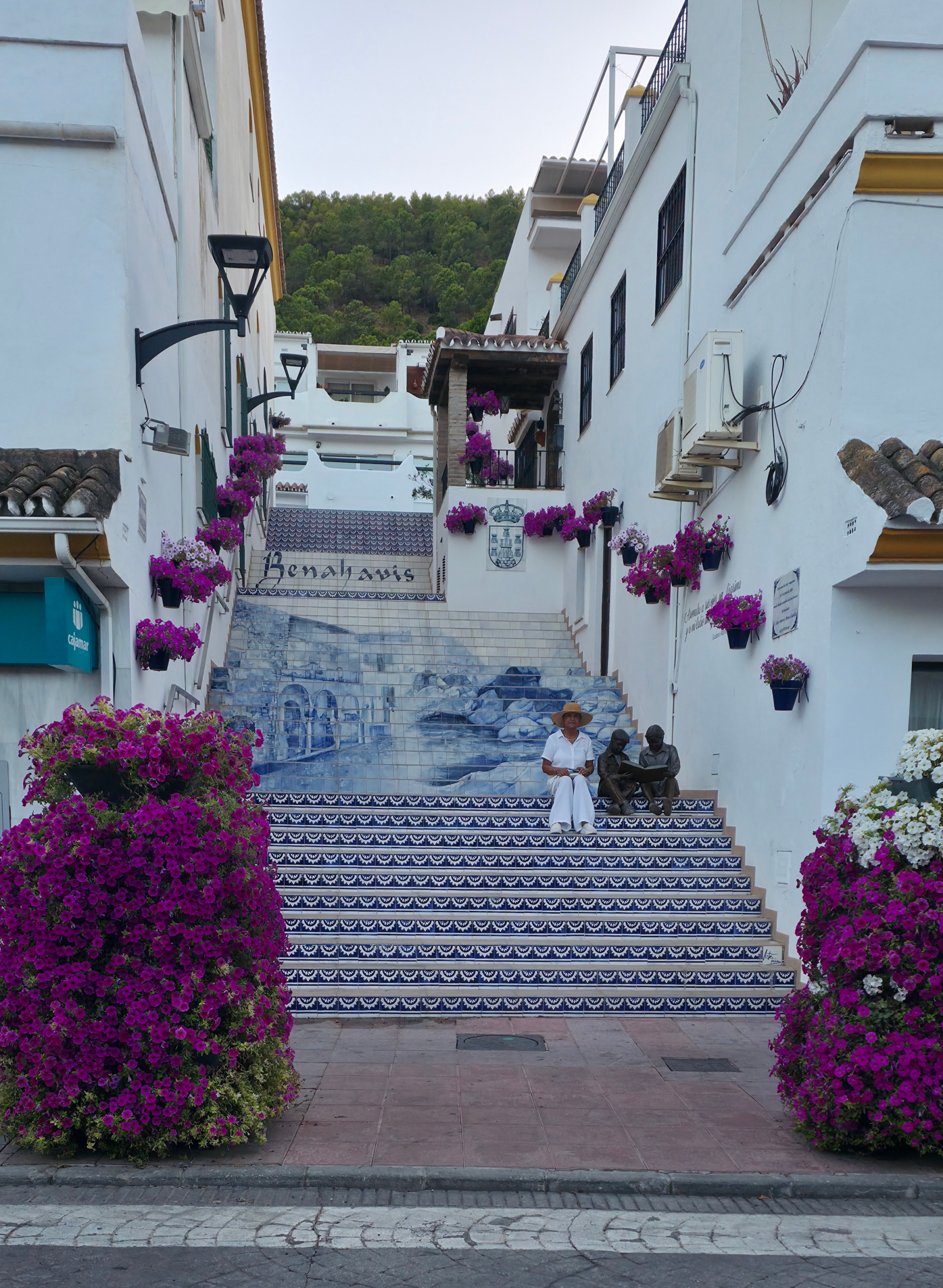 But there is something more.
Mojácar is a place where ancient history and local legends have become inseparable.
Its streets recall the Moors who once lived there. Its fountain tells a story of tolerance. Its Indalo symbol preserves a mysterious connection with prehistoric beliefs.
Its festivals celebrate centuries of cultural encounters, while its traditional food reminds us of the generations who worked, cooked and raised their families here.
And then there is that wonderfully improbable Walt Disney legend!
Perhaps that is the real charm of Mojácar.
Everywhere you turn, there is another story waiting to be discovered.
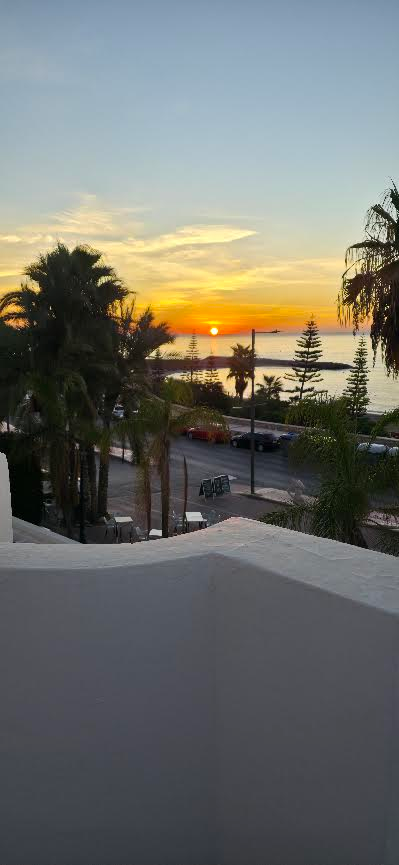
And when the afternoon sun begins to soften, casting warm shadows across the white buildings, it is easy to imagine that time itself has slowed down.
**Mojácar is not simply a village to visit. It is a village to explore, to experience and, above all, to remember.**
*Some places leave us with photographs. Others leave us with stories. Mojácar gives us both.*
*Historical inspiration: “Mojácar Viva”, a local tourist publication describing the village’s history, traditions, legends, cuisine and cultural heritage.*


Leave a Reply