
We love our Chocolate; a Swiss family of 4 eats approximately 22-24 kilos of Chocolate per year!
However, do most people think about what it takes to produce this tablet of goodness when they pick it up from the store?
Here are a few facts about one place in the world where most of the cocoa comes from: Switzerland 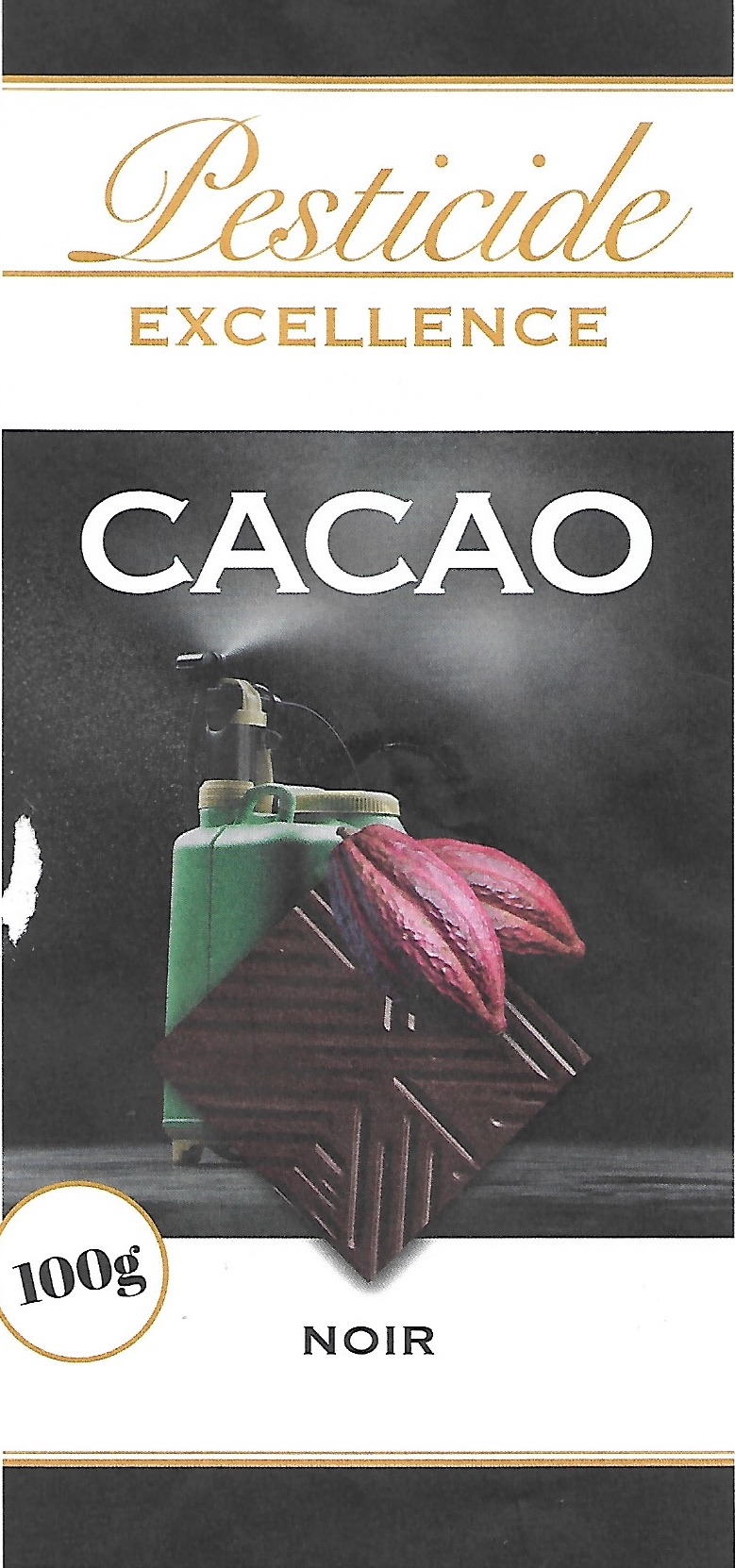
°Ghana is a very important actor in the Cocoa business: roughly 800,000 tons are produced here every year.
°Around 61,000 Cocoa farmers are a part of the Swiss Chocolate firms’ Programs in Ghana.
According to some Sustainability Initiative Coalitions, only one working partner is overseeing the Sustainability Programs.
°5,9 Billion Swiss Franc Revenue is the amount Swiss Chocolate Companies registered in 2025; meanwhile, most of the Cocoa Farmers live in dire poverty.
°9,700 Tons of pesticides were used in Ghana alone in 2023 – that is seven times more than back in 2010.
CHILD LABOR IN THE COCOA SECTOR
Around 1.5 million children work on cocoa plantations in Ghana and the Côte d’Ivoire.
The children repeatedly come into contact with pesticides, even though they are particularly vulnerable to the health risks.
BEE-KILLER PESTICIDES
The use of pesticides threatens the environment and all types of insects, including beneficial insects like bees. In Ghana, insect populations have been so severely decimated that 30,000 young people have been enrolled in a national program to pollinate cocoa trees by hand.
THE DEBT
To be able to buy the chemicals, many cocoa farmers go into debt. High costs, declining yields, and increasing pest pressure are further exacerbating their dependence on pesticides.
WORKING WITHOUT PROTECTION – HEALTH CONSEQUENCES
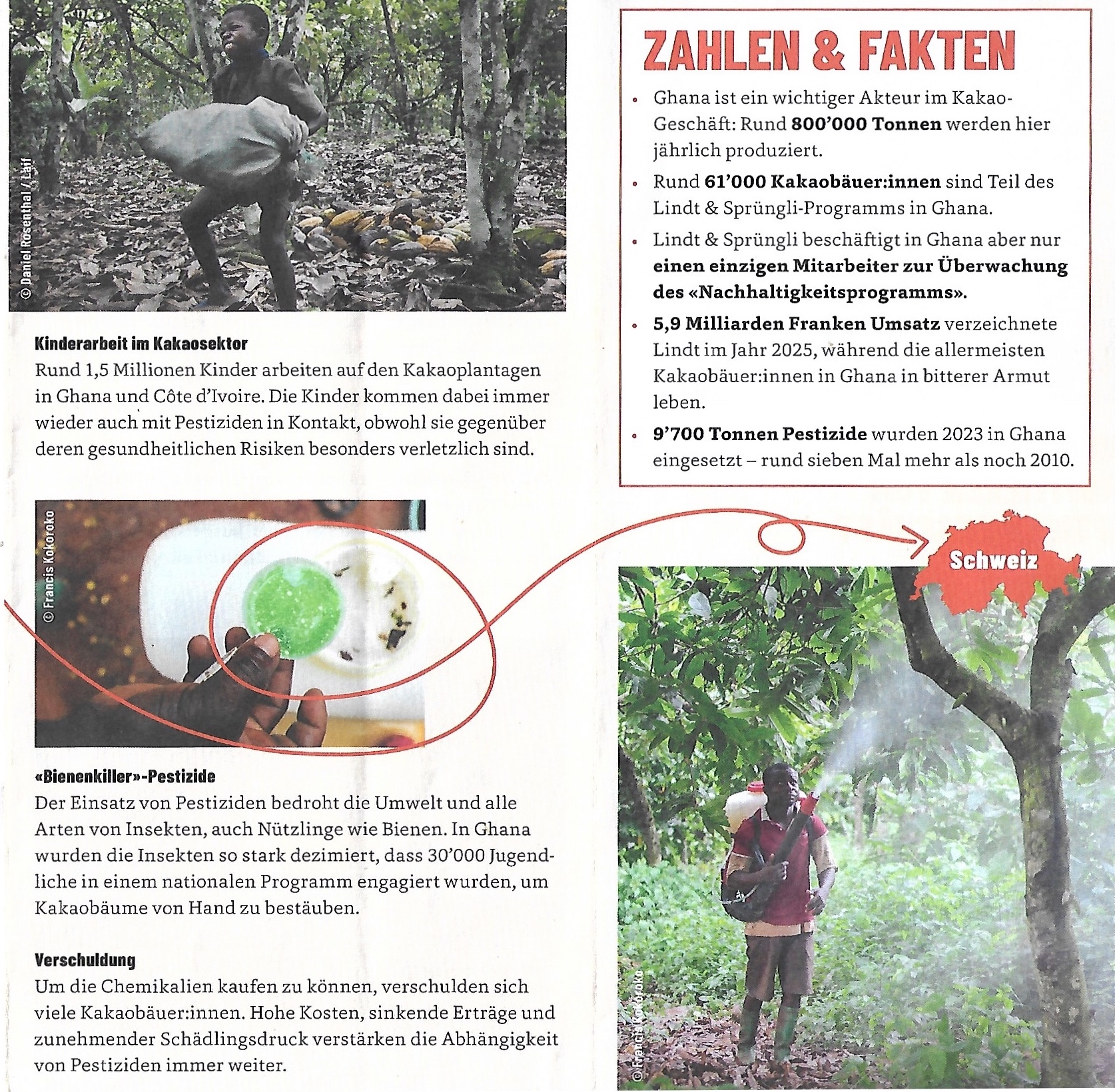
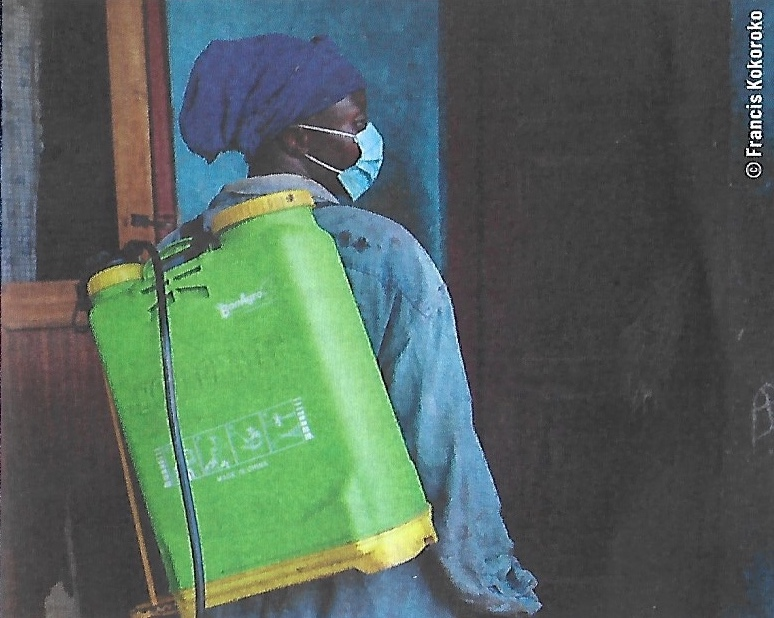
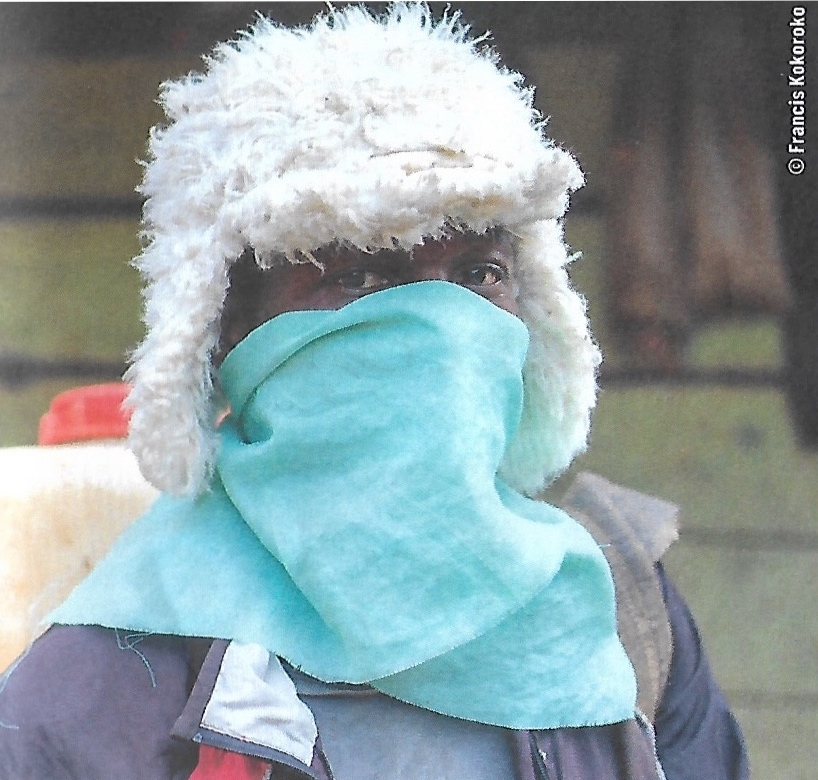
Protective clothing for farmers is scarcely available. They try to protect themselves with cotton cloths and report skin, respiratory, and eye problems.
DEFORESTATION
In West Africa, large areas of rainforest have been cleared over the decades. Studies show that a significant portion of the deforestation is directly attributed to the expansion of cocoa plantations.
HIGHLY DANGEROUS PESTICIDES IN COCOA FARMING
In cocoa farming in Ghana, pesticides with highly toxic active ingredients such as imidacloprid, thiamethoxam, or mancozeb are used. These substances are considered highly dangerous and are associated with significant health risks.
BANNED IN SWITZERLAND, USED IN GHANA
While strict rules on pesticides apply in Switzerland and the EU, active ingredients used in cocoa farming in Ghana have long been banned in these countries due to their high toxicity.
SWISS SUSTAINABILITY
While the Swiss Chocolate companies claim to source their cocoa “responsibly,” the farmers work without adequate protective clothing, often because it is unavailable. They report health problems such as skin irritation, shortness of breath, and burning eyes after pesticide spraying.
The companies have outsourced the implementation of their “sustainability program” to, among others, a local partner, the controversial commodity trader Ecom, based here in Switzerland. For years, Ecom marketed highly toxic pesticides as part of this “sustainability program.”
These corporations also profit from the toxic business:
ECOM
The commodities trading group Ecom is headquartered in Pully, the Canton of Vaud, and employs around 5,400 people worldwide. It is implementing part of the chocolate firm’s programs in Ghana.
At the same time, Ecom sells its own agrochemicals through its subsidiary Crop Doctor – including products with active ingredients banned in >Switzerland.
SYNGENTA
One of the world’s largest pesticide producers, Syngenta, headquartered in Basel, is also involved in the pesticide business in Ghana. Numerous pesticides from Syngenta and its subsidiary Adama can be found in the agroshops. Some of the products contain substances that are no longer approved in Switzerland and the EU. Nevertheless, they continue to be exported to the Global South. Bans in Europe are no reason for export bans in Africa. (Quote by Syngenta)
CONCLUSION
The Corporate Responsibility Initiative demands that Swiss Chocolate Corporations respect human rights and environmental standards in their business practices. They should be held accountable for violations.
We can increase the pressure on corporations with petitions to stop using highly toxic pesticides on cocoa!
Your Blogging Friend Ulrich Koepf


Leave a Reply